

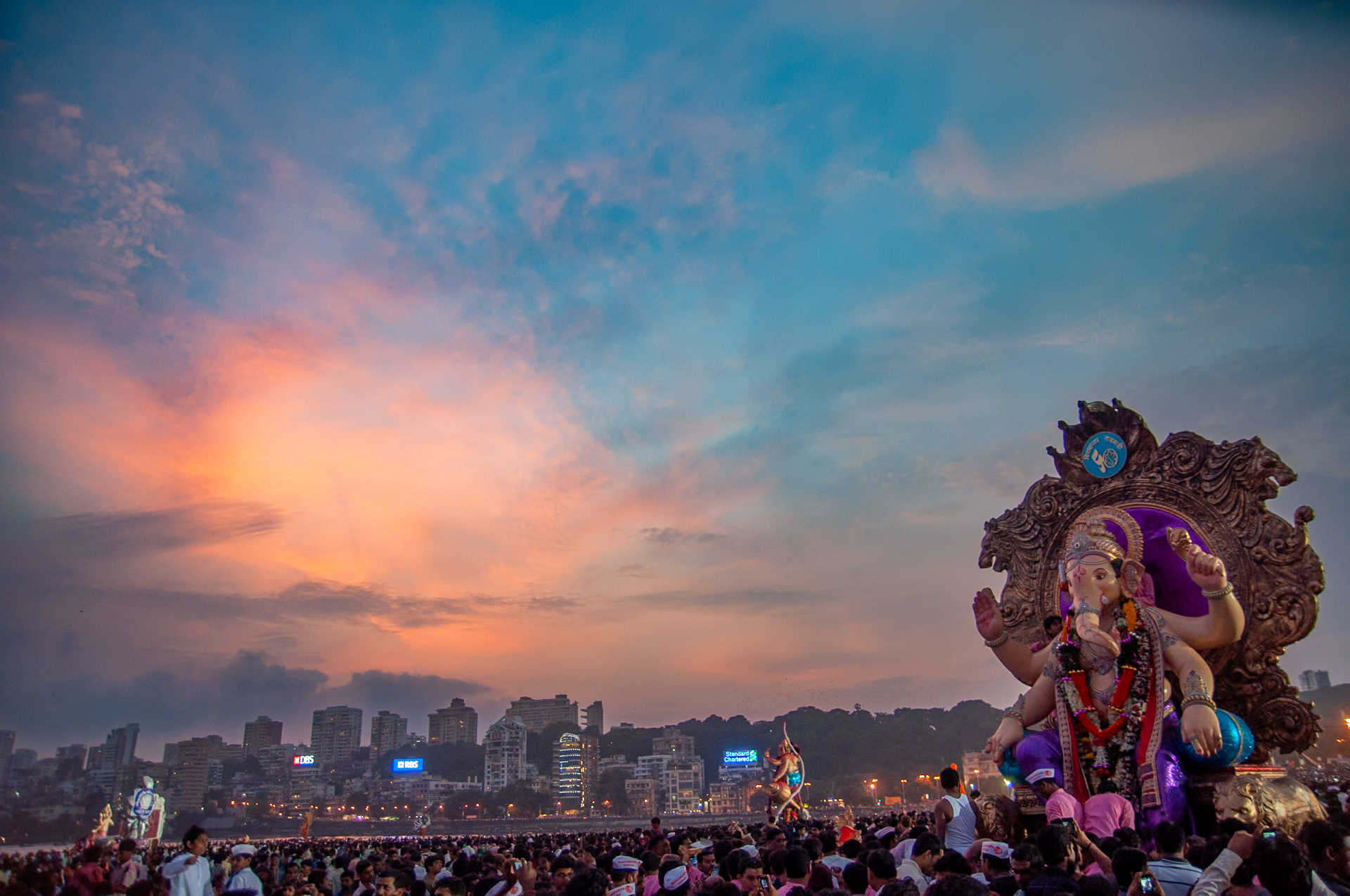
Ganpati Visarjan in Mumbai – Complete Photography & Visitor Guide
Introduction: Witnessing Devotion at Its Peak
Every year, Mumbai transforms into a city of devotion, energy, and emotion during Ganesh Chaturthi—culminating in the grand spectacle of Ganpati Visarjan.
This is not just a festival, it is a collective emotional moment, where thousands of idols of Lord Ganesha are carried through the streets in vibrant processions before being immersed into the sea.
My Ganpati Visarjan Mumbai Pictures
See my pictures of Ganpati Visarjan Mumbai in better resolution here .
For a visitor—or especially a photographer—this is one of the most intense and visually powerful cultural experiences in India.
But it can also be overwhelming if you are not prepared.
This guide will help you experience it meaningfully, safely, and respectfully.
What is Ganpati Visarjan?
Ganpati Visarjan marks the final day of Ganesh Chaturthi, when devotees bid farewell to Lord Ganesha with chants of:
“Ganpati Bappa Morya!”
Idols from homes and public pandals are taken in massive processions to immersion points across Mumbai such as:
- Girgaon Chowpatty (best place)
- Dadar Chowpatty
- Juhu Beach
The processions include:
- Dancing crowds
- Drummers (dhol-tasha)
- Gulal (colored powder) in the air
- Music, chanting, and celebration
It’s chaotic, emotional, loud—and deeply meaningful.
Best Places to Experience Ganpati Visarjan in Mumbai
1. Girgaon Chowpatty (Most Iconic)
- Major immersion point
- Famous mandals like Lalbaugcha Raja arrive here
- Extremely crowded but visually dramatic
2. Dadar Chowpatty
- Slightly less chaotic than Girgaon
- Strong local participation
- Great for mid-range crowd density
3. Juhu Beach
- Wider space
- Easier movement
- Good for first-time visitors
Best Time to Visit (Critical for Your Experience)
🕒 Start Early Afternoon – Stay Till Night or early morning
- Processions begin early but peak late evening to midnight
- Major idols arrive late at night
🌙 Night Experience (Highly Recommended)
- Dramatic lighting
- High energy
- Powerful visuals
What You Will Experience
Ganpati Visarjan is sensory overload in the best way possible:
- Thousands moving together in rhythm
- Drums vibrating through your chest
- Colored powder filling the air
- Emotional farewells as idols approach the sea
It’s not a performance.
It’s faith in motion.
Practical Tips for Visitors (Very Important)
✔️ Do’s
- Wear comfortable clothes (you will walk a lot)
- Carry minimal belongings
- Keep your phone and valuables secure
- Stay hydrated
- Follow police instructions and crowd flow
- Be prepared to have patience to shoot through the night
- Take breaks in between, else you will get tired and quit and miss the most iconic moments.
- It rains, come prepared with your rain wear for yourself and your camera.
❌ Don’ts
- Don’t push or try to move against crowd flow
- Don’t climb unstable structures for a better view
- Don’t disrespect rituals or block processions
- Don’t expect personal space
🚻 Facilities
- Limited public facilities
- Plan in advance before entering crowded zones
What Most Visitors Don’t Realize
1. It’s Physically Demanding
- Long hours
- Standing and walking in dense crowds
2. It’s Emotionally Powerful
- Final immersion moments can be intense
- Devotees often get emotional
3. Movement is Slow
- Expect delays
- Plan patience, not speed
Photography Guide for Ganpati Visarjan (Separate Section)
Now the part that truly matters if you’re serious about photography.
Why This Festival is Unique for Photography
Ganpati Visarjan offers:
- Raw human emotion
- Dynamic movement
- Color, light, and chaos
- Cultural storytelling at scale
But it’s also one of the most challenging environments to shoot in.
📷 What to Focus On
1. Human Emotion
- Devotees dancing
- Faces during immersion
- Expressions of devotion
2. Layers of Action
- Idol + crowd + environment
- Use depth to tell stories
3. Details
- Hands covered in color
- Drummers in motion
- Ritual gestures
🎯 Gear Recommendations
- 24–70mm (versatile range)
- 35mm / 50mm (street storytelling)
- Avoid carrying too much gear
💡 Light Strategy
- Evening: Best time with the setting sun
- Night: contrast, artificial lights, drama
- Use backlighting from street lamps creatively
⚠️ Ground Reality (Important)
- You will be pushed
- You will have limited control over framing
- You cannot “set up” shots
So:
👉 Adapt.
👉 Observe.
👉 Anticipate moments.
Ethical Photography (Very Important Here)
- Don’t obstruct processions
- Don’t use flash in people’s faces
- Be respectful during emotional moments
- Avoid treating it like a spectacle
Pro Tips (From Experience)
- Find one procession and stay with it
- Don’t keep moving constantly
- Look for quieter edges of chaos
- Shoot, then pause and observe
Common Mistakes Photographers Make
- Trying to cover everything
- Carrying too much equipment
- Ignoring safety
- Shooting only wide “crowd shots”
The real images are in moments, not scale.
Final Thoughts
Ganpati Visarjan is not just a festival you photograph.
It’s something you experience first—and then document.
If you go with patience, respect, and awareness, you will come back with more than just images.
You’ll come back with stories that stay with you.
If you want to photograph festivals like this with deeper understanding and guidance:
- Join my festival photography experiences in India
- Or get in touch for guided documentary photography sessions
Thanksgiving
Thanks to all my participants of my Photography Tours in India
All rights reserved. No copying without permission of the author Saurabh Chatterjee