

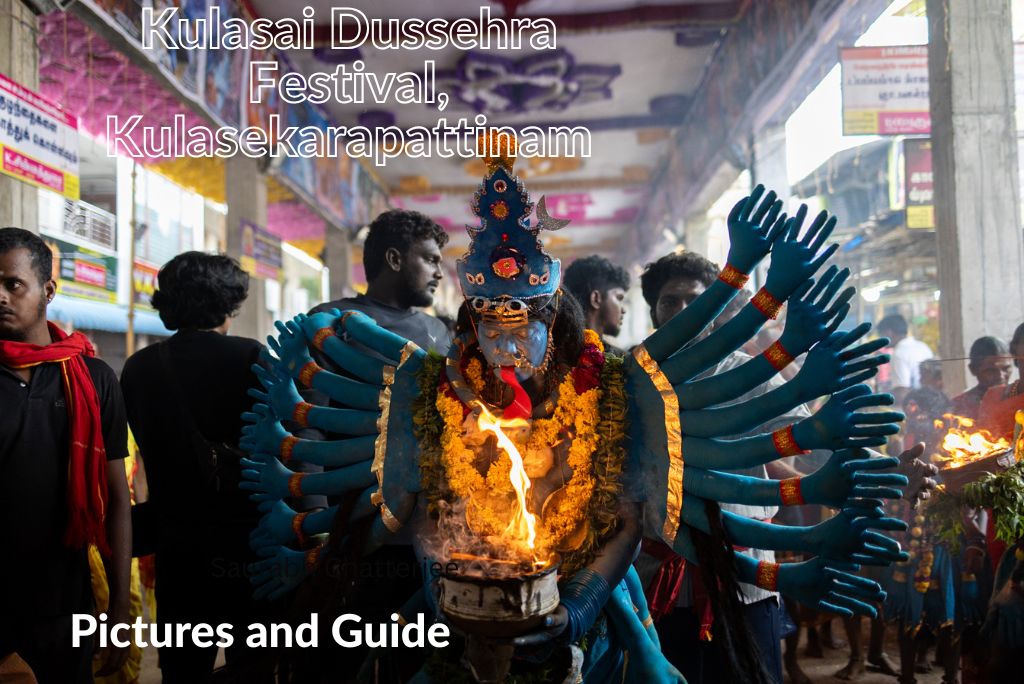
Kulasai Dasara Festival, Kulasekarapattinam – Complete Photography & Visitor Guide
Introduction: India’s Most Intense and Unfiltered Festival Experience
Far from the polished celebrations of urban festivals, the Kulasai Dasara in Kulasekarapattinam is raw, immersive, and unlike anything you’ve experienced before.
Celebrated during Navratri and culminating on Dasara, this festival is centered around the powerful MutharammanTemple.
My Kulasai Dasara Festival, Kulasekarapattinam Pictures
See my pictures of Kulasai Dasara Festival, Kulasekarapattinam in better resolution here .
What makes it extraordinary?
Thousands of devotees transform themselves into:
- Gods and goddesses
- Demons and mythological characters
- Animals, spirits, and symbolic forms
They don’t just dress up—they become the character (mostly kaali - the fierce goddess), often after days of fasting and spiritual preparation.
For a visitor or photographer, this is one of the most visually intense and culturally rich festivals in India.
What is Kulasai Dasara?
Unlike typical Dasara celebrations, this festival is about transformation and devotion through disguise.
Devotees:
- Take a vow (vratham)
- Prepare spiritually
- Dress as divine or mythical characters
- Walk in processions to the temple
The culmination happens when thousands gather near the temple and nearby beach for rituals and symbolic acts.
This is not staged.
This is faith expressed through identity transformation.
Best Time to Visit (Critical for Planning)
📅 Festival Duration
- 9–10 days during Navratri
- Peak on the last 2 days (Dasara)
🕒 Best Time of Day
🌅 Morning
- Calmer atmosphere
- Good for portraits and interactions when the devotees are getting dressed for the festival
🌇 Evening to Night (BEST)
- Peak activity
- Intense energy
- Dramatic visuals and lighting
⚠️ Peak Day Warning
On Dussehra day:
- Massive crowds
- Limited movement
- High intensity
Plan accordingly.
How to Reach Kulasekarapattinam
Nearest major city:
- Thoothukudi (~60 km)
Options:
- Fly to Tuticorin Airport
- Train to Tiruchendur
- Hire taxi or local transport
Stay options are limited—book early.
What You Will Experience
This is not another “festival visit.”, it’s an immersion into chaos (of devotees and of course of photographers).
You will see:
- Devotees fully transformed into Kali, Shiva, Hanuman, and more
- Faces painted with extraordinary detail
- Ritualistic movements and expressions
- Intense eye contact and presence
The streets become a moving theatre of mythology and belief.
Practical Visitor Guide (Very Important)
✔️ Do’s
- Arrive early in the day
- Stay hydrated, its extremely hot and sultry
- Wear light, comfortable clothes
- Keep valuables minimal
- Be patient—movement is slow
❌ Don’ts
- Don’t treat devotees like performers
- Don’t touch or interrupt someone in character
- Don’t block processions
- Don’t expect structured organization
🚻 Facilities
- Basic and limited
- Plan in advance
🧭 Navigation Tip
- Roads get blocked
- Walking is often the only way
- Expect long distances on foot
What Most Visitors Don’t Realize
1. It’s Physically Exhausting
- Heat, humidity, crowds
- Long hours on your feet
2. It’s Deeply Spiritual
This is not cosplay.
Many participants are in:
- Trance-like states
- Deep devotional focus
3. It’s Unpredictable
- No fixed schedule
- Moments happen suddenly
Photography Guide for Kulasai Dussehra
This is where the festival becomes truly extraordinary for photographers.
Why This Festival is a Photographer’s Dream
You get:
- Character-driven storytelling
- Intense expressions
- Rich colors and textures
- Pattern of the hands
- Rare cultural documentation opportunities
But it demands awareness, patience, and respect.
📷 What to Focus On
1. Portraits with Presence
- Direct eye contact
- Expressions in character
- Faces and body paint
2. Transformation Stories
- Before and after moments
- Preparation stages
- Transition into character
3. Environmental Context
- Crowds and surroundings
- Temple and street interactions
🎯 Composition Tips
- Use shallow depth for isolation
- Frame subjects within crowd layers
- Focus on eyes—they carry the story
- Look for contrast (color, emotion, character types)
⚙️ Gear Recommendations
- 35mm / 50mm for storytelling
- 24-70 for most shots. 70-200 if thats your style.
- Keep gear minimal
💡 Light Strategy
- Day: harsh but vibrant
- Evening: softer tones
- Night: dramatic contrast
Use available light creatively.
⚠️ Ground Reality (Important)
- You cannot control your environment
- Subjects move unpredictably
- Crowds will interfere
So:
👉 Stay flexible
👉 Anticipate moments
👉 Accept imperfection
Ethical Photography (Critical Here)
This is non-negotiable.
- Always show respect
- Use gestures before shooting portraits
- Avoid flash in faces
- Don’t exploit vulnerability
Remember:
You are documenting belief, not creating content.
Pro Tips (From Experience)
- Stay in one area instead of moving constantly
- Build connection before photographing
- Observe body language—it tells you when to shoot
- Take breaks—sensory overload is real
Common Mistakes Photographers Make
- Treating it like a costume festival
- Shooting only wide chaotic scenes
- Ignoring individual stories
- Rushing through locations
The best images come from slowing down.
Final Thoughts
Kulasai Dussehra is not easy.
It’s:
- Intense
- Overwhelming
- Unpredictable
But if you approach it with patience and respect, it becomes one of the most rewarding documentary photography experiences in India.
This is not just a festival you photograph.
It’s one you experience, absorb, and then interpret through your lens.
If you want to photograph festivals like this with deeper understanding and guidance:
- Join my festival photography experiences in India
- Or get in touch for guided documentary photography sessions
Thanks to all my participants of my Photography Tours in India
Thanksgiving
Thanks to all the photographers who joined for my Photography tours.All rights reserved. No copying without permission of the author Saurabh Chatterjee